Over the past few weeks, if your eyes have wandered beyond the screens and schedules, you might’ve caught a glimpse of something quietly magical — golden flowers cascading down like confetti from the skies. Roadsides, parks, and even unassuming street corners have been bathed in their yellow brilliance. If this vision sounds familiar, you’ve met the amaltas.
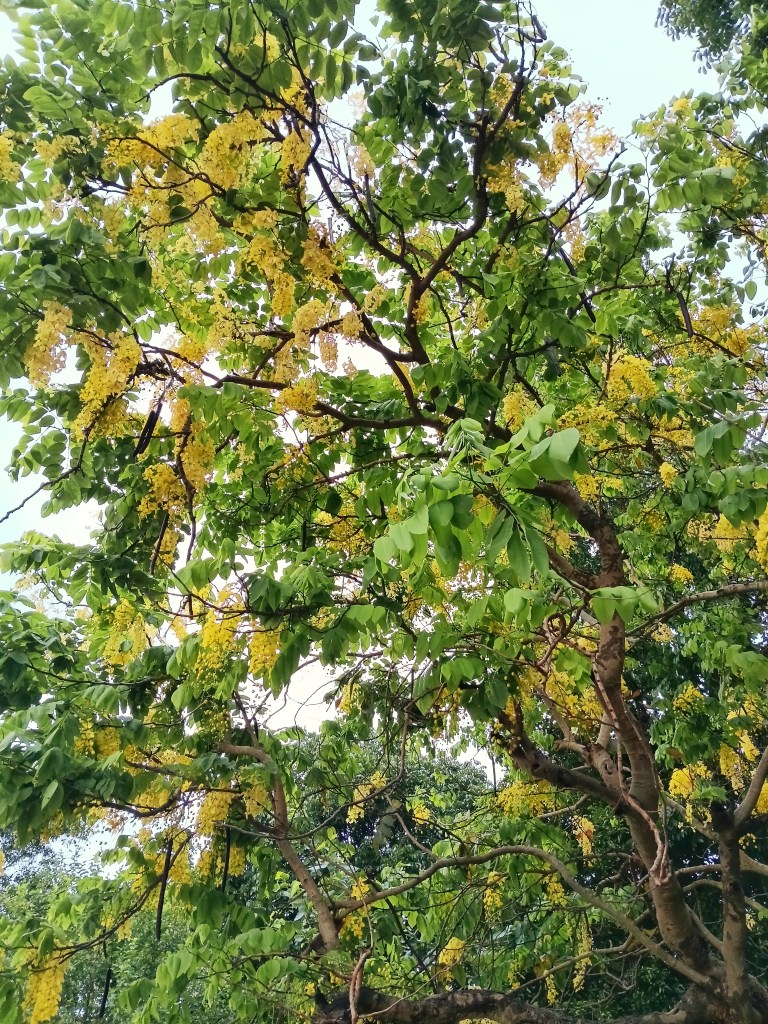
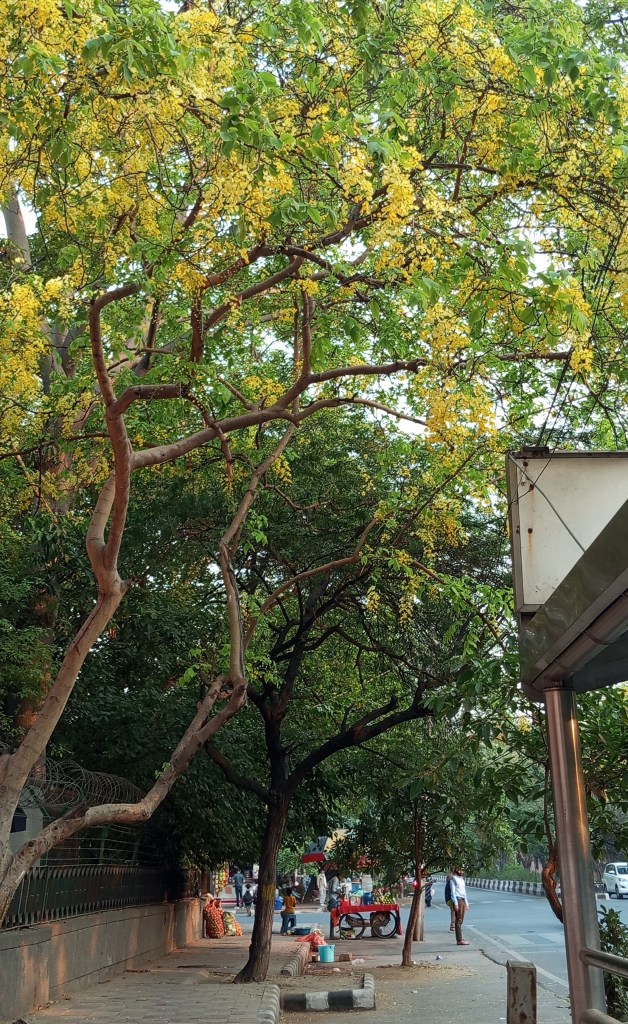
Known as the golden shower tree in English, Cassia fistula is native to the Indian subcontinent. Here in India — especially in the northern and eastern regions — we fondly call it amaltas. Come summer, this tree turns into a spectacle: its long, pendulous clusters of yellow flowers glow against a parched urban backdrop, setting the scene for a season of reflection and renewal. In cities like Delhi, entire streets wear this floral halo, luring both casual walkers and shutterbugs alike, drawn in by beauty that asks nothing in return.
How the Amaltas Tree Blooms with Life
But amaltas offers more than visual delight. Look a little closer, linger a little longer, and you’ll notice that the tree hums with quiet life.
Bees and fruit flies flit from blossom to blossom, busy in their pollination ritual. If you’re lucky, a sunbird might dart into view — wings aflutter, sipping nectar like it’s spring’s final gift. High above, bee-eaters perch and wait, weaving themselves into this fleeting ecosystem.
At the tree’s feet, a different world thrives. Ants and centipedes roam the fallen petals, playing their part in nature’s slow, circular rhythm — decomposition, renewal, and nourishment.
Even butterflies — especially the large, greenish-yellow emigrants — have found a partner in the amaltas. They lay their eggs on its leaves. And so, under its canopy, the story of metamorphosis quietly unfolds, from egg to caterpillar to pupa to winged marvel.
Then there’s the silent work the tree does for us — cleaning the very air we breathe. Its wide, open leaves act like filters, capturing dust and pollutants, scrubbing the urban air ever so gently, ever so patiently.
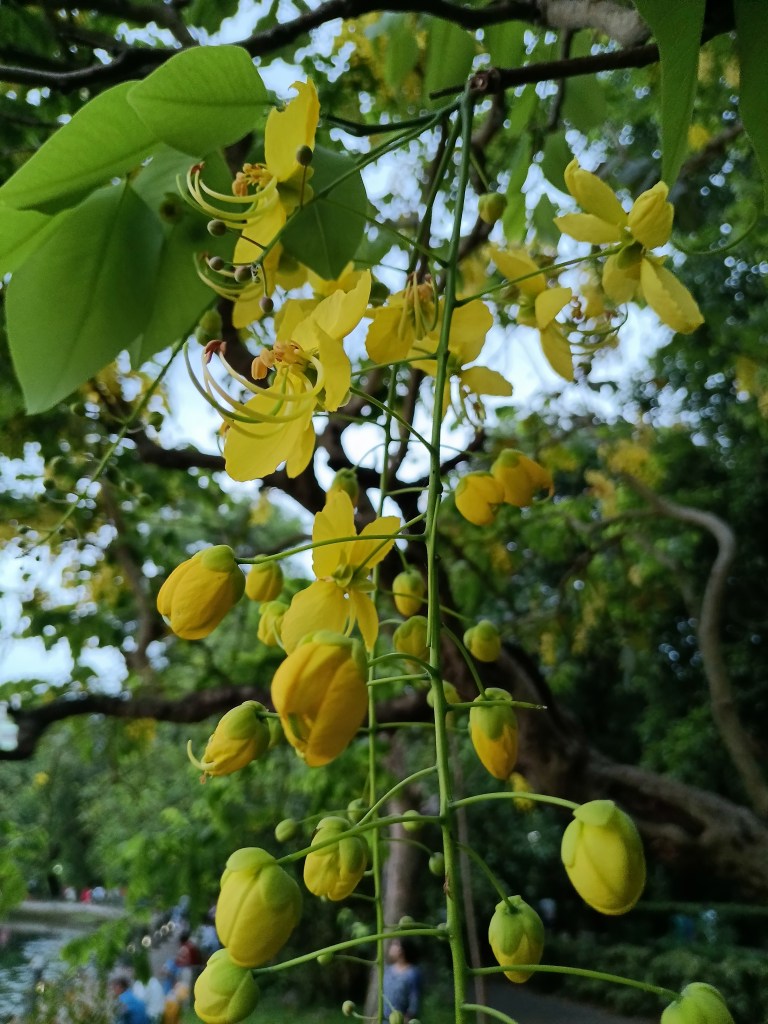
Even Whispers the Coming Monsoon
But perhaps the most poetic role of all lies in the way amaltas tells time. Ancient Indian texts like the Brihat Samhita — dating back over 1,300 years — mention that the onset of the monsoon could be predicted by watching this tree. Forty-five days after the amaltas blooms, said the sages, the rains would come. And in many places, they still do. Even modern studies from the late ’90s and early 2000s support this — nature’s own meteorology, rooted in observation and awe.
An Invitation to Wander Beneath the Golden Showers
So, the next time you pass an amaltas, perhaps don’t just pass by. Stop. Breathe. Watch how sunlight plays with the blossoms. Follow a bee on its looping path. Touch the bark. Listen to the rustling leaves.
The tree asks for nothing, but it offers so much — if we care to notice.
Have you ever wandered beneath an Amaltas in full bloom? Someday, let’s set out on that golden-shower walk together—there’s an entire tale waiting to be told, from the tree’s scientific naming and its burst of blossoms to the clever ways it reproduces and scatters its seeds. Let me know when you’re ready, and we’ll explore every chapter of this living story.


 shomeclicks
Leave a comment